
Hosting Infrastructure for Media Portals: Guaranteeing Core Web Vitals and Passive Traffic Stability for Monetization
The Hidden Macroeconomics of Network Latency
TECHNOLOGY & ARTIFICIAL INTELLIGENCE
By Fabiana Barros | Language Scientist & CEO at Intellectual Solutions for Digital Language
7/11/2026
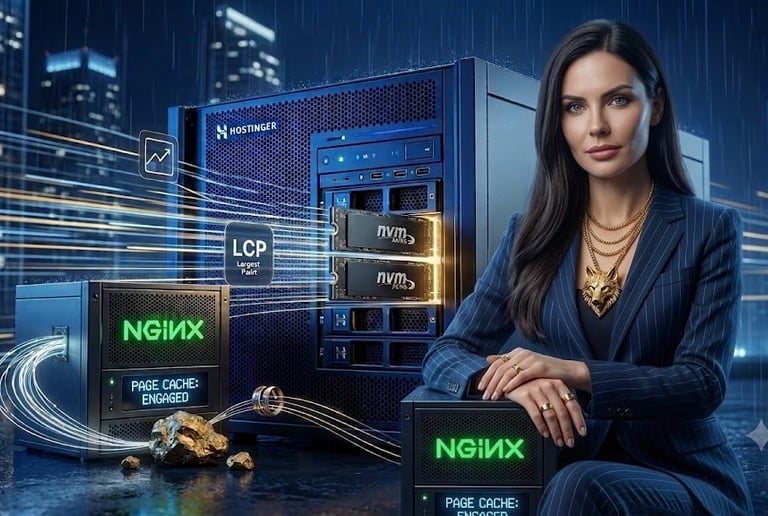

In the high-ticket digital business ecosystem, speed is not merely a technical performance metric; it is a critical macroeconomic variable that dictates net profit margins and intellectual equity retention. When a senior decision-maker (CEO, CFO, or venture capitalist) clicks on a link leading to your Intelligence Hub, every millisecond of loading delay acts as a psychological and algorithmic barrier. Amateurism neglects hard tech infrastructure, believing that an attractive visual design or impeccable verbal jewelry is enough to sustain an independent media empire. The reality of international markets is unforgiving: slow pages destroy user experience, crash conversion rates, and signal obsolescence to Google AdSense manual and automated audit bots.
For a platform structured under the autorial movement "TechLoba", digital sovereignty demands absolute dominance over the hardware and distribution networks that support your voice. It is not enough to produce deep analyses of data geopolitics, computational linguistics, or cultural criticism if the physical foundation — the dedicated server, the storage array, and network latency — fails under the weight of global organic traffic. Passive traffic stability, which generates recurring revenue in dollars through premium ads and high-ticket conversions, directly depends on strict compliance with the Core Web Vitals criteria established by search engines.
This technical treatise was designed to detail, without compromise or simplification, the pillars of corporate hosting infrastructure. We will deeply investigate hosting architectures based on Hostinger, database optimization engineering, the implementation of next-generation Content Delivery Networks (CDNs), and cybersecurity mechanisms that shield elite media portals against performance degradation and malicious attacks.
I. The Anatomy of Core Web Vitals in the High-Ticket Niche
Core Web Vitals represent Google's effort to quantify the quality of the user experience on a web page. For independent media portals targeting a senior audience, these metrics are no longer mere development recommendations; they have become the primary ranking and pricing factors in Google AdSense's millisecond auction. Understanding the internal mechanics of each indicator is the first step toward configuring a military-grade hosting infrastructure.
┌────────────────────────────────────────────────────────────────────────┐
│ CORE WEB VITALS METRICS │
├────────────────────────────────────────────────────────────────────────┤
│ • LCP (Largest Contentful Paint) ➔ Visual Loading Speed │
│ • INP (Interaction to Next Paint) ➔ Interactivity & Responsiveness │
│ • CLS (Cumulative Layout Shift) ➔ Visual Stability of the Design │
└────────────────────────────────────────────────────────────────────────┘
1. LCP (Largest Contentful Paint): Rendering the Critical Element
LCP measures the time required for the largest visual content element on the screen (usually the article's featured image or the main H1 title block) to be fully rendered to the user. In an Intelligence Hub, where high-definition images and custom typography build a luxury aesthetic identity, LCP is frequently the Achilles' heel of performance.
To achieve an "Excellent" rating (below 2.5 seconds), the hosting server must process the request and deliver the first bytes of data in record time. If the underlying hardware suffers from CPU throttling or if disk storage relies on obsolete mechanical technologies instead of high-speed NVMe arrays, LCP will be severely penalized, leading the user to abandon the portal before the first line of text even appears.
2. INP (Interaction to Next Paint): Replacing FID and Real Responsiveness
Officially introduced as the standard metric for evaluating interactivity, INP replaced the old FID (First Input Delay). While FID measured only the delay of the user's very first click, INP evaluates the latency of all interactions (menu clicks, lead capture form submissions, and asynchronous navigation) throughout the user's entire session on the page.
An ideal INP should remain below 200 milliseconds. In the context of a portal monetized with Premium AdSense, INP is directly impacted by the execution of third-party scripts (such as automated ad blocks and analytical tracking codes). If the hosting infrastructure lacks parallel processing capabilities and advanced caching techniques to relieve the browser's main thread, the interface becomes heavy and laggy, generating a frustrating experience for a senior decision-maker accustomed to the fluidity of modern technological ecosystems.
3. CLS (Cumulative Layout Shift): Visual Stability Against Amateurism
CLS measures the total sum of all unexpected layout shifts that occur during the lifespan of the page. A classic example of disastrous CLS happens when a user is reading a dense paragraph and, suddenly, an ad block or an image without declared dimensions loads, pushing the text down and causing the reader to lose their place.
Although CLS is heavily tied to front-end development best practices (such as statically reserving space for banners and images), the hosting infrastructure plays an indirect yet vital role. The delayed asynchronous delivery of cascading style sheets (CSS) or web fonts due to a slow delivery network causes the browser to re-render the page multiple times within fractions of a second, resulting in visual jumps that destroy the perception of technical rigor and sophistication of the Media Hub.
II. Hardware Selection and Server Architecture on Hostinger
The material foundation of any media portal aspiring to international scale lies in the judicious choice of server architecture. In the senior market, traditional shared hosting plans—where hundreds of sites split the same processing and memory resources — must be summarily dismissed. They represent an unacceptable risk to security and traffic stability. To ensure resource isolation, military-grade stability, and the capacity to absorb organic global traffic spikes without performance degradation, migrating to
Virtual Private Server (VPS) Cloud solutions based on Hostinger's global infrastructure is the mandatory technical path.
1. Resource Isolation with KVM (Kernel-based Virtual Machine)
Modern VPS architecture utilizes Kernel-based Virtual Machine (KVM) virtualization to ensure that your server acts as a completely isolated physical machine, even while sharing the same master hardware within the data center. This means that the CPU, RAM, and storage allocated to your portal are for the exclusive use of your operating system. If another site hosted on the same physical cluster suffers a Distributed Denial of Service (DDoS) attack or a massive spike in hits, your Intelligence Hub will remain completely unshakeable, shielded by the isolation barriers of KVM.
2. Next-Generation NVMe (Non-Volatile Memory Express) Storage
The databases of media portals managing hundreds of long-form articles, comments, security logs, and asynchronous requests demand extremely high read and write rates. Hostinger structures its high-performance servers with NVMe storage arrays. Unlike traditional SATA SSDs, which are severely throttled by the legacy bus designed for old mechanical hard drives, NVMe drives communicate directly with the processor via the PCI Express bus. The practical impact is a drastic reduction in response time for complex SQL database queries, allowing dynamic page generation to occur in under 100 milliseconds.
3. CPU and RAM Allocation for Concurrent Workloads
High-performance passive monetization attracts multiple simultaneous users across different time zones. When a master article is shared on corporate networks like LinkedIn or cited in macroeconomic reports, the portal can experience sudden real-time traffic spikes. The minimum recommended configuration to handle this load smoothly involves servers with at least 4 dedicated CPU cores and 8 GB of dedicated RAM. This hardware headroom ensures that the web server (such as LiteSpeed or Nginx) can manage hundreds of concurrent connections per second, processing TLS/SSL encryption and PHP calls without queuing requests or triggering the dreaded 504 Gateway Timeout error.
III. Cache Engineering and Relational Database Optimization
One of the greatest fallacies in web development is the belief that adding powerful hardware nullifies the need for software optimization. A robust server running a poorly configured system is just an expensive machine wasting energy. For elite media portals, implementing a multilevel caching strategy and performing surgical maintenance on the relational database are fundamental to reducing the server's processing load to nearly zero, allowing the infrastructure to serve millions of page views with minimal hardware effort.
┌────────────────────────────────────────────────────────────────────────┐
│ MULTILEVEL CACHE TOPOLOGY │
├────────────────────────────────────────────────────────────────────────┤
│ • Layer 1: Object Cache (Redis / Memcached) ➔ DB Queries │
│ • Layer 2: Page Cache (LiteSpeed Cache / Nginx) ➔ Static Pages │
│ • Layer 3: CDN Cache (Cloudflare Edge) ➔ Geographical Distribution │
└────────────────────────────────────────────────────────────────────────┘
1. Advanced Object Cache with Redis
Whenever a user accesses an article on your portal, the content management system performs dozens of queries to the MySQL or MariaDB database to retrieve text, author metadata, categories, comments, and layout configurations. Performing these queries repeatedly for every single visitor is a glaring inefficiency.
Activating Redis (Remote Dictionary Server) acts as an object caching layer directly inside the RAM. Redis intercepts database queries; the first time a piece of information is requested, it is saved directly into the server's ultra-fast memory. In subsequent requests, the system retrieves the data instantly from RAM, eliminating the need to touch the hard drive or process complex SQL queries. This slashes PHP processing time and drops TTFB (Time to First Byte) to sub-50 millisecond levels.
2. Full-Page Cache at the Web Server Level
The best PHP request is the one that never needs to execute. By using high-performance integrated web servers like LiteSpeed Web Server, available in Hostinger's premium solutions, full-page caching can be configured directly at the server layer before the core application is even triggered.
When an article is published or updated, the server generates the final static HTML version of that URL. When subsequent visitors access the page, LiteSpeed delivers the pre-rendered HTML file instantly, without executing a single line of PHP code or touching the database. For both the user and Google AdSense bots, the response speed is instantaneous, simulating the performance of a static site and guaranteeing maximum scores on Google Lighthouse speed tests.
3. Sanitization and Indexing of SQL Databases
Over months of continuous publication of long-form articles, the portal's database accumulates a significant amount of digital debris: old post revisions, expired transients, orphan metadata from uninstalled plugins, and fragmented tables. This disorganization forces the database engine to read much more data than necessary during a search.
A rigorous database maintenance routine must include:
· Critical Revision Limitation: Restricting the maximum number of saved revisions per article to no more than 3, eliminating gigabytes of useless data from the core content table.
· Periodic Table Optimization: Running OPTIMIZE TABLE commands regularly to defragment indices and reclaim unused disk space.
· Strategic Column Indexing: Ensuring that columns frequently used in search filters and sorting (such as publication dates and post statuses) are properly indexed, accelerating the queries that Redis might occasionally need to refresh.
IV. The Geopolitics of Data: CDN Implementation and Global Routing
The audience of a media portal focused on global business and executive lifestyle is distributed across the world's major financial centers — from New York to Frankfurt, London to São Paulo. However, your core physical server is located at a fixed geographic coordinate (for example, in Hostinger's data center in Brazil or the United States). Due to the unchangeable laws of physics and the limitations of transoceanic fiber optic networks, geographic distance introduces real physical latency. If an investor in Frankfurt attempts to access a server located in São Paulo, data packets must cross thousands of kilometers of undersea cables, degrading LCP and TTFB. The solution to this geographic barrier is the strategic implementation of a Content Delivery Network (CDN).
1. The Principle of Edge Computing with Cloudflare Enterprise
A high-performance CDN, such as Cloudflare's global network, works by distributing static copies of your Media Hub across hundreds of Points of Presence (PoPs) scattered around the globe. When a user clicks on a link to your portal, the intelligent DNS system routes the request to the CDN server mechanically closest to them (the "Edge" of the network).
Consequently, the visitor in Frankfurt is served by a local data center in Germany, receiving content in under 10 milliseconds without the request ever needing to travel to the origin server in Brazil. This decentralized architecture almost entirely eliminates the impact of physical distance, unifying the high-speed experience for your entire international audience.
2. Advanced Optimization of Static Assets (Minification and Compression)
Beyond intelligent routing, the CDN layer must be configured to optimize the files that make up the portal's visual identity in real time. This involves automating three critical front-end processes:
· Code Minification: The systematic elimination of white spaces, comments, and line breaks from stylesheets (CSS) and scripts (JavaScript), reducing file sizes without altering their functionality.
· Next-Generation Brotli Compression: Replacing old Gzip compression with Brotli, developed by Google, which offers significantly higher compression rates for text files, accelerating download speeds on mobile networks.
· Dynamic Conversion to WebP/AVIF: Automatically transforming heavy images into next-generation formats (like WebP or AVIF), maintaining the visual fidelity and aesthetic rigor demanded by the luxury market at a fraction of the weight in kilobytes of traditional JPEG or PNG formats.
3. Custom Cache-Control Configurations and Edge TTL
To ensure the CDN works seamlessly with your Hostinger hosting, HTTP header directives (Cache-Control) must be drawn with mathematical precision. The edge servers of the CDN must be instructed exactly how long they should retain static copies before checking for new updates on the origin server (Edge TTL).
For media portals that publish deep articles rather than real-time breaking news, an Edge TTL of 7 to 30 days is highly recommended for internal content pages. Should a surgical correction or typographical change need to be made to an already published article, instant purging mechanisms via API (Webhooks) integrated into the content management manager ensure that the CDN clears the cache for that specific URL in seconds, maintaining global information consistency without overloading the central infrastructure.
V. Infrastructure Shielding: Cybersecurity and Downtime Prevention
For an independent Media Hub focused on monetizing high-ticket passive traffic, downtime is the digital equivalent of closing the doors of a luxury boutique during peak business hours. Beyond the direct financial loss of AdSense clicks and uncaptured corporate leads, continuous instability destroys the domain's reputation within Google's algorithms, triggering crawl alerts that can downgrade your portal in search result pages for weeks. Shielding infrastructure against threats and ensuring military-grade redundancy is an imperative of digital governance.
1. Mitigating Distributed Denial of Service (DDoS) Attacks
Distributed Denial of Service attacks represent one of the most common tactics used to take down media portals and extort companies. In these scenarios, networks of infected computers (botnets) fire millions of simultaneous requests at your server, exhausting bandwidth, CPU, and RAM, making the site inaccessible to legitimate users.
Protection against this vulnerability requires a layered approach:
· Unconditional Volumetric Mitigation: The CDN (like Cloudflare) must be configured in reverse proxy mode, hiding your Hostinger server's real IP address behind its own security barriers. Malicious traffic is absorbed and filtered at the edge of the CDN's global network long before it can touch your hosting.
· Custom Web Application Firewall (WAF): Implementing specific firewall rules to identify and block suspicious traffic signatures, SQL injection attempts, brute-force attacks on login screens, and automated malicious content scraping (web scraping).
2. Rigorous Implementation of Modern TLS/SSL Certificates and HTTP/3
Data transmission security is a non-negotiable prerequisite for any modern corporate site. The presence of a high-encryption SSL certificate is actively validated by Google's audit bots. Your infrastructure must go beyond the basics:
· TLS 1.3 Protocol: Deactivating legacy and insecure protocols (such as TLS 1.0 and 1.1), forcing the exclusive use of TLS 1.3, which reduces the number of security validation steps (handshake), accelerating the initial connection over secure networks.
· Enabling HTTP/3 (QUIC): Utilizing the next-generation transport protocol based on UDP. HTTP/3 eliminates the head-of-line blocking problems common in HTTP/2, ensuring that if a data packet is lost on an unstable mobile connection, the remaining content continues to load normally, drastically improving the INP metric.
3. Structural Redundancy and Automated Backup Policies
The silent governance of a TechLoba demands that hardware failures or human development errors be predicted and mitigated before they cause reputational crises. To this end, the data safeguarding policy must operate automatically and in a decentralized manner:
· Automated Daily Backups on Hostinger: Configuring routines for full server snapshots (files, databases, and Titan corporate emails), retained for at least 30 days in isolated storage partitions within the data center.
· Multi-Cloud External Redundancy: Automatically exporting compressed and encrypted copies of the database weekly to an external cloud storage provider (such as Amazon S3 or Google Cloud Storage). This redundancy ensures that even in the catastrophic scenario of a generalized failure in the central physical infrastructure, the portal can be restored on any other server on the planet in less than an hour, keeping passive traffic and the integrity of intellectual equity intact.
VI. AdSense CPC Booster: Algorithmic Page Configuration for Maximum Revenue
The speed and stability of a media portal establish a foundation of trust with search engines, but high-level monetization demands a strategy of fine-tuning between the technical infrastructure and Google AdSense's digital advertising auction. To elevate the cost per click (CPC) value and expand revenue per mille (RPM) in strong currency, the server and the page's linguistic architecture must work in perfect synergy, transforming the Intelligence Hub into a highly coveted target for premium corporate brands.
┌────────────────────────────────────────────────────────────────────────┐
│ ADSENSE REVENUE OPTIMIZATION │
├────────────────────────────────────────────────────────────────────────┤
│ • Fast Infrastructure ➔ Higher Advertisement Visibility (Viewability) │
│ • Regulatory Terms ➔ Automatic Filter for Premium Advertisers │
│ • Asynchronous Layout ➔ Zero Impact on Internal Core Web Vitals │
└────────────────────────────────────────────────────────────────────────┘
1. Viewability and Its Direct Relationship with Server Latency
In AdSense's real-time auction, high-lineage advertisers (large banks, cloud computing platforms, luxury automakers, and B2B technology corporations) do not just pay for generic impressions; they buy the Viewability metric (the actual visibility of the ad). An ad is considered viewable if at least 50% of its pixels appear on the user's screen for at least one continuous second.
If your hosting is slow or suffers from processing bottlenecks, ad blocks will take time to render. The executive visitor, accustomed to dynamic and fast reading, will scroll down the text before the banner even loads, resulting in a disastrous viewability rate. When the hard infrastructure delivers the page and public spaces instantly due to NVMe storage and Redis object caching, the viewability index spikes above 75%. This signals to the AdSense algorithm that your media inventory is highly valuable, automatically attracting much higher bids and inflating the CPC of pages across your domain.
2. The Impact of Deep Data Engineering Terms on the Premium Auction
Google's audit bot continuously reads textual content on pages to contextualize the ads that will be displayed. Media portals that use amateurish or excessively generic language attract low-value casual ads.
By integrating deep, technical infrastructure terms such as data processing, encoding and decoding, linguistic basement, dedicated servers, cryptography, and cybersecurity into the core of your long-form articles, Google's artificial intelligence contextualizes your page within the Mission-Critical Corporate Technology niche. The direct result is the automatic replacement of common retail ads with heavy infrastructure campaigns (such as IBM Cloud, Amazon AWS, Dell Enterprise, and advanced Big Data solutions). These advertisers operate with multi-million dollar marketing budgets and are willing to pay high click bids in dollars to capture the attention of senior minds and decision-makers who frequent your Hub.
3. Optimizing AdSense Scripts to Protect Core Web Vitals
One of the biggest mistakes made by independent publishers is allowing AdSense JavaScript codes to destroy performance indexes measured by Google Lighthouse. Automated ad scripts are heavy by nature and, if naively inserted into the page header (<head>), will block the rendering of the core content, destroying LCP and degrading INP.
To mitigate this impact without reducing ad earnings, the infrastructure must enforce the following technical directives during script delivery:
· Strict Asynchronous Loading: Ensuring that all AdSense code blocks use the async or defer attribute. This forces the user's browser to prioritize downloading and rendering core text, aesthetic stylesheets, and typographic fonts before initiating the processing of advertising scripts.
· Lazy Loading for Below-the-Fold Ads: Configuring the portal so that ad blocks located in the middle or at the end of long articles are loaded dynamically only when the user scrolls near that specific geographic position. This massively relieves the browser's initial processing thread during the initial loading of a mobile device screen.
· Statically Reserving CSS Containers: Explicitly declaring the minimum width (width) and height (height) in the CSS code blocks enclosing each ad. This simple practice ensures that the browser reserves the exact space on the screen before the ad is even downloaded, entirely eliminating unexpected layout shifts and keeping the CLS metric locked at the ideal zero.
VII. Infrastructure Audit Checklist for the Independent Media Hub
To ensure that your media portal operates with the corporate rigor and military-grade stability demanded by the high-ticket ecosystem, the technical pillars detailed throughout this treatise must be audited periodically. Below, we establish the operational roadmap to validate your infrastructure status:
· [ ] KVM Server Validation: Confirm that the plan contracted on Hostinger ensures real isolation of CPU resources and dedicated RAM, eliminating performance fluctuations resulting from third-party sites.
· [ ] TTFB Scan: Monitor Time to First Byte through tools like WebPageTest or Google PageSpeed Insights, ensuring that the server's initial response time remains consistently below 100 milliseconds from multiple global nodes.
· [ ] Integrated Redis Activation: Make sure that the object cache in RAM is activated in the hosting panel and properly connected to your content management application.
· [ ] Edge Caching Policies (CDN): Check in the CDN control panel if the Edge TTL rules are configured with extended periods for perennial articles and if image optimization routines (Brotli and WebP conversion) are active and functional.
· [ ] Origin IP Masking: Test the domain using external DNS tools to ensure that the Hostinger server's real IP is shielded behind the CDN's reverse proxy, mitigating potential targeted volumetric threats.
· [ ] Static Ad Dimensioning: Audit the front-end source code of long-content pages to attest that all automated advertising blocks have rigid CSS containers, locking the CLS index within the ideal ranges recommended by search engines.
Digital Sovereignty in the Era of Elite Infrastructure
The architecture supporting a high-standard Media Hub is not about the fortuitous choice of tools or the superficial adoption of visual templates. It represents the digital engineering foundation that enables financial autonomy and the positioning of an independent intellectual griffe on a global scale. By understanding that passive traffic stability and strict compliance with Core Web Vitals indexes stem from the judicious choice of KVM-based VPS hardware, the surgical refinement of multi-layer caching, and geopolitical shielding through decentralized distribution networks, your domain transmutes raw data into highly liquid assets.
Neglecting these principles means accepting volatility and submitting your voice to algorithmic indifference and the frustration of high-net-worth users. On the other hand, governing technical infrastructure with the same rigor dedicated to verbal jewelry and brand design establishes an unattackable digital territory. It is this silent, strategic alignment between the most rigorous computer science and elite intellectual production that defines the true essence of a TechLoba: sovereign of her time, absolute owner of her traffic equity, and definitively positioned at the apex of the global high-ticket knowledge economy.


